













AI agents
An AI agent combines a language model, approved tools and a controlled workflow to act on a task. Define permissions, stop conditions and human approval before deployment.
- MapContext
- DefineScope
- TestAcceptance
- AgreeOperation
Businesses served by Seleto Codes


















Definition and scope
An AI agent combines a language model, approved tools and a controlled workflow to act on a task. Define permissions, stop conditions and human approval before deployment.
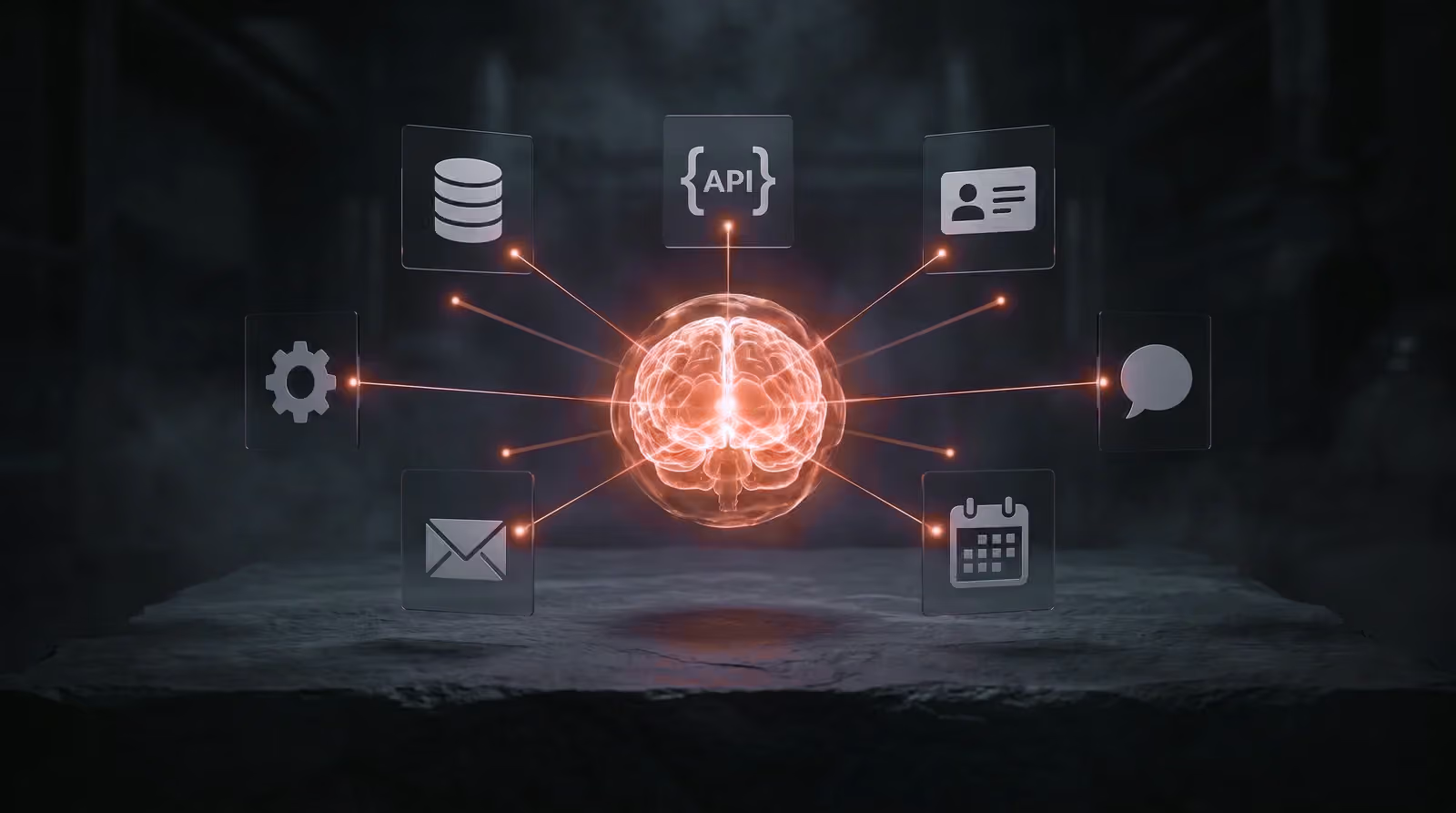
- Agent, chat interface or fixed workflow?
- A chat interface may use tools, while a fixed workflow follows predefined rules. An agent selects some actions dynamically; choose from task predictability, permissions and review needs.
- What makes an agent task testable?
- Define permitted tools, representative inputs, expected outcomes and stop conditions. Include failed tool calls and uncertain results in the evaluation cases.
Planning essentials
Define scope and ownership for: customer support.
Define scope and ownership for: sales assistance.
Define scope and ownership for: operational tasks.
Define scope and ownership for: research assistance.
Define scope and ownership for: internal knowledge.
Planning and validation
Resolve the practical questions before implementation.
Scope questions
Customer support — Retrieve approved support information, draft a response and route uncertain cases to an operator.
Sales assistance — Classify a request or draft a CRM update; require approval before contacting a lead or changing sensitive records.
Operational tasks — Define a bounded task, permitted actions and a stop condition before connecting operational tools.
Research assistance — Collect material from authorized sources and retain citations so a person can check the resulting summary.
Internal knowledge — Organize retrieval from approved documents, respecting document permissions and showing the sources used.
Tool integration — Validate API access, input schemas and error recovery in a test environment before allowing tool actions.
Checks for the delivery plan
Discover — Map the task, current workflow and decisions that require a person.
Diagnose — Inspect tool permissions, data quality and representative failure cases.
Design — Design tool contracts, retrieval, approval gates and task-specific evaluation cases.
Deliver — Implement the bounded agent, test tool actions and run a supervised pilot against the evaluation set.
Evolve — Review failed tasks and changes in models or tools; prioritize revisions using the evaluation results.
Operation — Assign the operating owner and review unresolved risks before expansion.
Work scope
Task-oriented AI agents
Choose the work needed for your process; each item has its own inputs, validation and operating responsibilities.
Customer support
Retrieve approved support information, draft a response and route uncertain cases to an operator.
Sales assistance
Classify a request or draft a CRM update; require approval before contacting a lead or changing sensitive records.
Operational tasks
Define a bounded task, permitted actions and a stop condition before connecting operational tools.
Research assistance
Collect material from authorized sources and retain citations so a person can check the resulting summary.
Internal knowledge
Organize retrieval from approved documents, respecting document permissions and showing the sources used.
Tool integration
Validate API access, input schemas and error recovery in a test environment before allowing tool actions.
Choosing an approach
Compare behavior, constraints and operating effort.
Chat interface
A chat interface centers on conversation and may also call tools. Its capabilities depend on the underlying workflow and permissions.
Deterministic workflow
Explicit rules suit known sequences and validations. Exceptions can be routed to a person without requiring a language model.
Agent workflow
An agent selects some actions within limits. Tool permissions, evaluation cases and approval gates determine where it can operate.
Implementation path
Prepare, implement, validate and hand over.
The first usable delivery is planned with explicit inputs, dependencies and acceptance criteria. The illustrated steps need review against your operating conditions.
Inspect tool permissions, data quality and representative failure cases.
Design tool contracts, retrieval, approval gates and task-specific evaluation cases.
Implement the bounded agent, test tool actions and run a supervised pilot against the evaluation set.

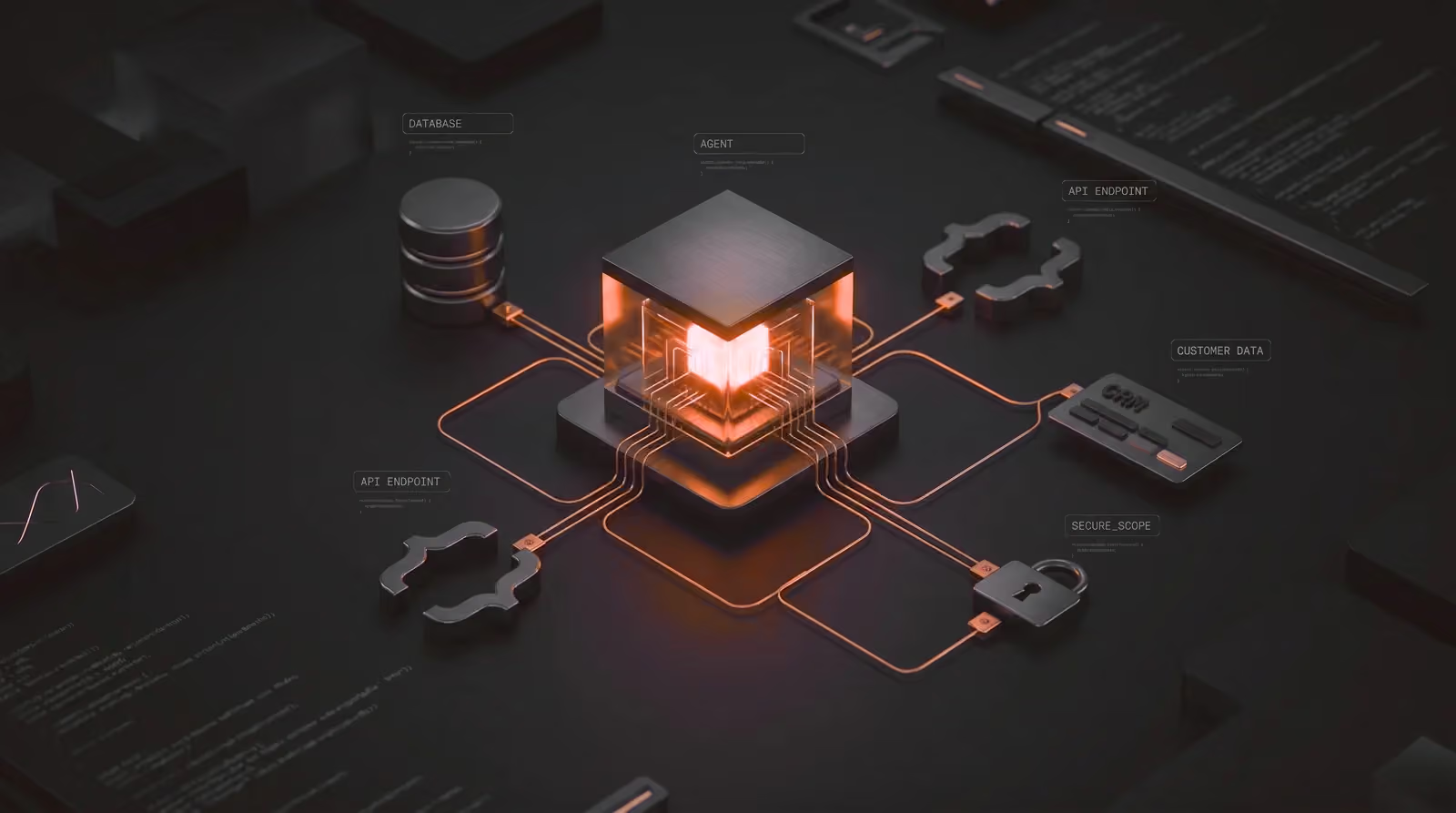



Define the task, permitted tools and acceptance criteria.
Options to assess
Confirm technology fit and project-specific capability.


- LangChain
- Azure AI

Assessing the proposed work
Look for concrete deliverables and accountable decisions.
A useful proposal connects the business task to technical decisions, validation evidence and the people responsible for operation.
Defined scope
The proposal identifies which workflows are included, which inputs are needed and how changes will be reviewed.
Authorized interfaces
Access roles and supported interfaces are confirmed before integration, with named owners for credentials and revocation.
Observable validation
Representative cases and acceptance checks make it possible to assess delivery against the intended business task.
Operational handover
Documentation identifies operating responsibilities, unresolved issues and the support or maintenance work agreed separately.
A method applied to this service
From understanding the process to validated changes.
- 01
Discover
Map the task, current workflow and decisions that require a person.
- 02
Diagnose
Inspect tool permissions, data quality and representative failure cases.
- 03
Design
Design tool contracts, retrieval, approval gates and task-specific evaluation cases.
- 04
Deliver
Implement the bounded agent, test tool actions and run a supervised pilot against the evaluation set.
- 05
Evolve
Review failed tasks and changes in models or tools; prioritize revisions using the evaluation results.
Where we work
Collaboration and responsibilities
- Meetings and response windows are agreed before work begins.
- Access requires authorization, named owners and an agreed revocation process.
- City clocks are time references. The legal address is in Barreiras, Brazil.
Budget and responsibilities
Estimate preparation, implementation and operation separately.
The estimate follows the selected workflows, data readiness, integration effort and validation needs. Software licenses and ongoing operation are identified separately.
- To define in the proposal
Preparation
Map the task, current workflow and decisions that require a person.
- To define in the proposal
Implementation
Implement the bounded agent, test tool actions and run a supervised pilot against the evaluation set.
- To define in the proposal
Operation
Infrastructure, platform consumption, licenses, updates and support need explicit operating responsibilities and a separate estimate.
Choosing an agent framework
Compare workflow control, tool permissions, evaluation support, logging, licenses and maintainability before choosing a framework.
LangGraph: assess workflow state, tool boundaries, testing and the maintenance needed for the proposed task.
CrewAI: assess role separation, coordination overhead and how results will be evaluated.
AutoGen: assess conversation control, permissions and failure handling for the required workflow.
n8n: assess connector compatibility, credentials, execution limits and exception handling.
A framework does not remove model errors or operating responsibilities. Test the actual task and keep approval and recovery paths explicit.
Communication for a remote agent project
Agree language, meeting windows and the people authorized to approve tool access or sensitive actions. Location alone does not determine these conditions.
FAQ
Questions and practical answers
01What is an AI agent?
02AI agents vs chatbots — what's the difference?
03Do AI agents actually work, or do they just hallucinate?
04How much does AI agent development cost?
05Can you integrate an agent with our existing systems (ERP, CRM, tools)?
06What does the build process look like, and how long does it take?
07Can AI agents run locally or on-premises?
08How do I choose an AI agent development company?
09What's included in your AI agent development services?
10Which frameworks do you use to build AI agents (LangGraph, CrewAI, AutoGen, n8n)?
Related services
Often paired with AI agents
 View
AI automation
AI automation uses models inside a workflow to classify, extract or draft from variable inputs.
AI View
Data and analytics
Data pipelines, validated dashboards and analysis for defined business decisions, with source quality, refresh and access checks.
Data & AI View
Custom software
Custom software is designed around a specific workflow or business rule.
Software & Product
Tell us what needs to change.
Share the process, current tools and the result you need to validate. Use the contact channels to discuss a possible scope and the information needed next.
Discuss the project